Along with the designs, automation programs are provided with the machines to control the digital axes and the various functions.
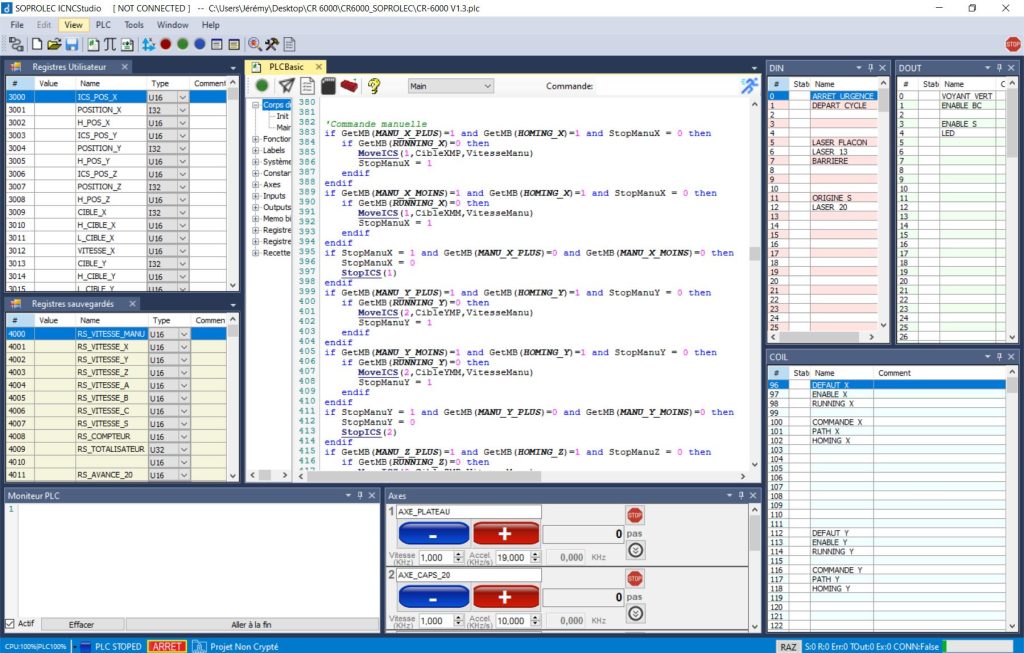
With an industrial automation system, we can design and implement control solutions for special-purpose machinery, enhancing performance, precision, and efficiency. Industrial automation typically involves the use of programmable logic controllers (PLCs), sensors, actuators, and human-machine interfaces (HMIs) to automate the operation of machines. Here’s what you can achieve:
- Machine Control and Coordination: An industrial automation system allows for precise control over a machine’s operations, including start/stop sequences, speed control, and movement. For special machines, this means automating complex processes, like controlling the movement of robotic arms, conveyors, or assembly lines.
- Integration with Sensors and Actuators: Industrial controllers can receive inputs from various sensors (proximity, temperature, pressure, etc.) and trigger responses from actuators (motors, valves, hydraulic/pneumatic systems). This is crucial in special machines where precise reactions to environmental changes or product requirements are needed.
- Process Monitoring and Adjustment: Automation enables real-time monitoring of machine performance. For example, pressure, temperature, or speed deviations can be detected, and adjustments can be made automatically to maintain optimal operation, reducing human error and improving quality control.
- Fault Detection and Diagnostics: PLCs can be programmed to detect faults or malfunctions within the system. In case of an issue, the system can shut down the machine or display diagnostic information on an HMI, enabling quicker repairs and reducing downtime.
- Safety Management: Automation can implement safety protocols, such as emergency stops, interlocks, and safety barriers, to protect operators and machinery. It ensures that safety measures are consistently followed without manual intervention.
- Data Logging and Reporting: Automation systems can collect and store data regarding machine performance, production rates, and maintenance schedules. This data can be used for analysis, troubleshooting, and improving efficiency.
- Customizable Logic and Sequences: Using PLCs, you can program customized sequences for unique operations, such as batch processing, complex assembly tasks, or specific material handling procedures. This flexibility makes it ideal for special-purpose machines that require non-standard workflows.
- Communication with Other Systems: Industrial automation systems can be integrated with enterprise-level systems like MES (Manufacturing Execution Systems) or ERP (Enterprise Resource Planning) software, enabling seamless communication and data exchange across the production line or between multiple machines.
- Human-Machine Interface (HMI): HMIs allow operators to monitor and control the machine through a visual interface. You can create custom screens that display operational data, machine status, alarms, and more, allowing for easy management and troubleshooting.
- Robotics Integration: Automation systems often control robotic arms or other automated machinery, enabling tasks like assembly, welding, material handling, and packaging, tailored to the specific needs of the machine.
In summary, an industrial automation system for special-purpose machines provides precise control, enhanced efficiency, and the ability to handle complex, repetitive, or safety-critical tasks with minimal human intervention. It ensures that machines operate reliably and can be optimized to meet specific production requirements.